
Don’t Win Arguments. Test Ideas.
A different way to disagree.

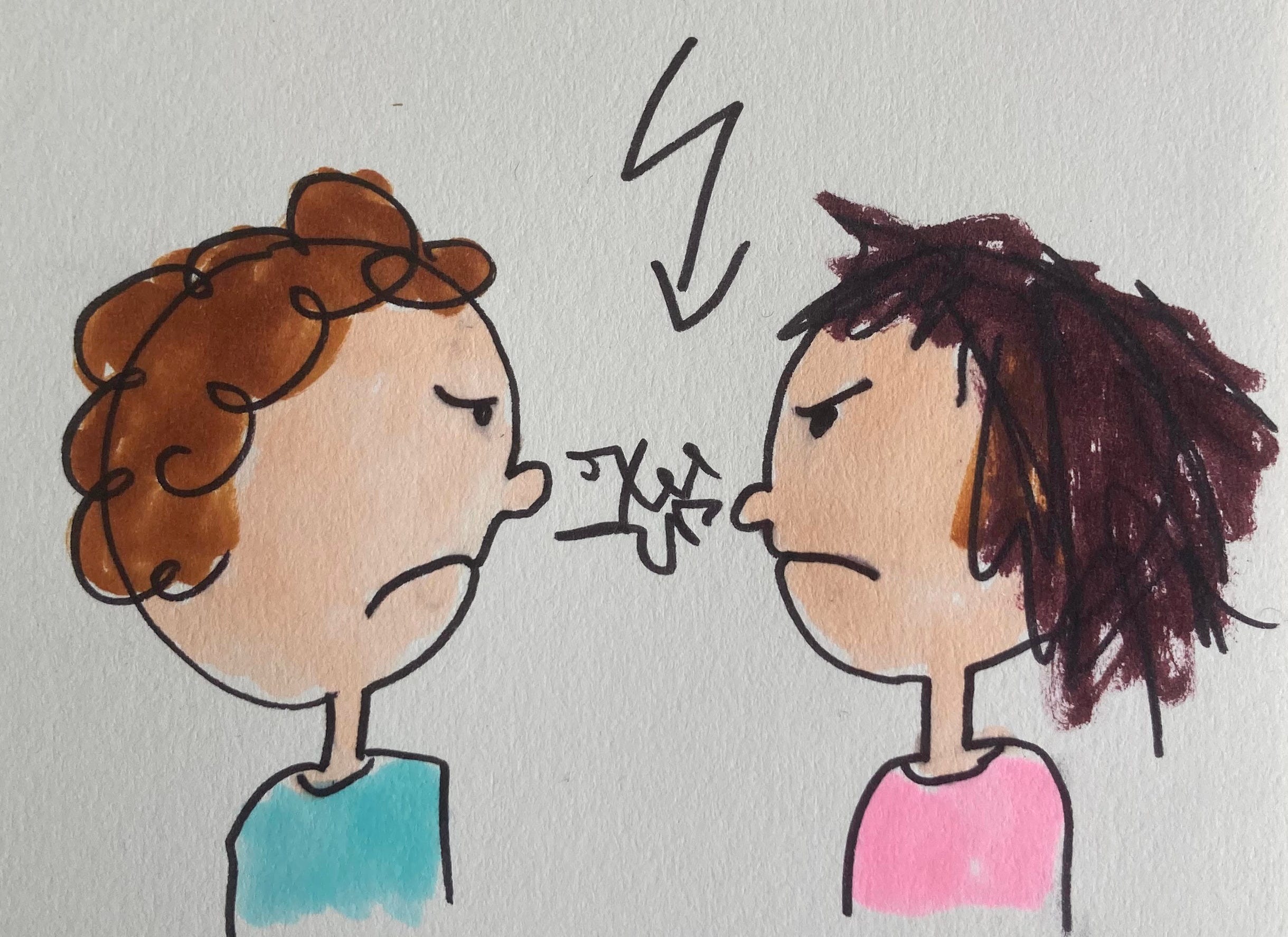
I’ve been thinking about how quickly we disagree. Over the past week, I noticed the same pattern in three completely different conversations.
One of my clients told me she sometimes gets frustrated with herself. For example, when someone in the supermarket starts shouting because the checkout line is taking too long. Nobody says anything. Neither does she. She already knows how the argument would go.
Another conversation was more personal. It was about politics. I noticed how quickly we stopped trying to understand each other and started defending our positions instead. Eventually we changed the subject—not because we’d reached an understanding, but because we’d grown tired.
Then I noticed the same pattern somewhere completely different.
On Substack, people were debating Pangram, the new AI detector. Some questioned its accuracy. Others debated what should count as AI writing. Others wondered how much Substack was paying for it.
But I kept wondering something else. Were they even talking about the same idea?
Before we can disagree, we have to discover whether we’re asking the same question.
Maybe you know conversations like these.
You rarely leave them wiser.
More often, you leave exhausted.
It made me wonder whether conversations had always been this way.
Then I thought of Socrates—the man who, twenty-five centuries ago, got people talking for hours.
A Curious Observation
Rereading his dialogues, I noticed something I’d overlooked for years.
Socrates talks about craftsmen surprisingly often. Doctors. Shipbuilders. Bakers. Carpenters.
For a long time I assumed these were just examples pulled from everyday life in Athens.
Now I think they’re much more than that.
Not because Socrates had some special interest in carpentry.
But because craftsmanship stood for something missing from the big questions of life.
The Test
A carpenter could show that a chair holds. A physician could show that a treatment works. A shipbuilder could show that a ship floats.
People could argue about good craftsmanship. But in the end, there was a test that didn’t care about anyone’s opinion.
Either the chair holds. Or it doesn’t.
Either the ship floats. Or it doesn’t.
That’s exactly what was missing from the questions that occupied Socrates.
What is courage?
What is justice?
What is piety?
Everyone had an opinion. But how could you tell whether it held?
Maybe that’s why Socrates wasn’t looking for ready-made answers. Maybe he was looking for a method—a way of examining ideas as carefully as a skilled craftsman examines his work.
He wasn’t trying to defeat the other person. He was trying to work alongside them.
The Workshop
The more I thought about it, the more his dialogues felt like visits to a workshop.
Someone walks in carrying an idea.
“Courage means having no fear.”
“You should always tell the truth.”
“People don’t really listen anymore.”
Socrates takes the idea in hand. Not to judge it right away. Not to prove it wrong.
He sets it on the workbench.
Only then does the real work begin.
The Work
The more I watched, the more it seemed like Socrates followed the same sequence, again and again.
He always starts with an invitation.
“Help me understand.”
Before an idea can be tested, it first has to be spoken out loud.
He sets it on the workbench.
Socrates separates the idea from the person.
Not: “You’re wrong.”
But: “What exactly are we talking about?”
Suddenly the idea sits between them. No longer one person against the other—both looking at the same workpiece.
He gets to know the material.
“What exactly do you mean?”
“Can you give me an example?”
A craftsman doesn’t work on something he hasn’t understood yet. Why should we treat ideas any differently?
He turns the workpiece.
“Is that always true?”
“Are there exceptions?”
“How would someone who disagrees respond?”
A carpenter examines a piece of wood from every angle. Socrates does the same with ideas.
Then comes the stress test.
A chair has to bear weight. A bridge has to withstand wind and weather. And an idea? An idea should be able to withstand stress too.
That’s why Socrates looks for counterexamples. Not to win—to find out whether the idea really holds.
Then he reworks it. If a contradiction shows up, he doesn’t discard the person. He improves the idea.
It’s not the person on trial.
It’s the idea.
The Real Difference
Maybe so many conversations fail today because we’re testing people.
Their intelligence.
Their motives.
Their character.
We often do something else without noticing. We mistake how confidently someone speaks for how good their ideas are. I wrote about that here: Smart People Often Sound Less Intelligent Under Pressure.
Socrates tested ideas. That’s a world of difference.
Ideas are allowed to be incomplete. They’re allowed to have cracks. They’re allowed to be revised.
Maybe that’s why so many discussions feel like battles. We’re no longer just defending our beliefs. We’re defending ourselves.
A Different Way of Talking
Ever since I started reading Socrates through a craftsman’s eyes, I’ve been hearing difficult conversations differently.
I find myself asking less often:
“Who’s right?”
And more often:
“What are we actually trying to understand?”
Or:
“Which idea are we putting on the workbench today?”
Maybe what we need is fewer debates. And more workshops.
Places where people discover the question before defending the answer. Where questions aren’t attacks. Where contradictions aren’t defeats. Where thinking matters more than being right.
Because ideas belong on the workbench. People don’t.
A good conversation is where people build better ideas together.
If you’d like more ideas to put on the workbench, subscribe.
Jane, placing the idea on the workbench changes the social geometry of disagreement. Once the claim sits between the participants, questions about meaning, examples, exceptions, and consequences become shared tools, while identity stays outside the stress test. Your craftsman lens gives intellectual humility a practical sequence a leader, teacher, or colleague can use before a room hardens into camps. Thank you for showing how careful disagreement can preserve dignity while improving the thought everyone must carry forward.
well written. My comments. People are angry because something is wrong and they cant find it. You talk about the tradesman. His life was his meaning, today we lack meaning in what we do. We live in a world of disconnects. we don't farm, we buy. We don't sew we throw away. Nothing has value so we consume more. The anger is a symptom, not the problem. The problem is the behavioral sink that I talk about in my book..